

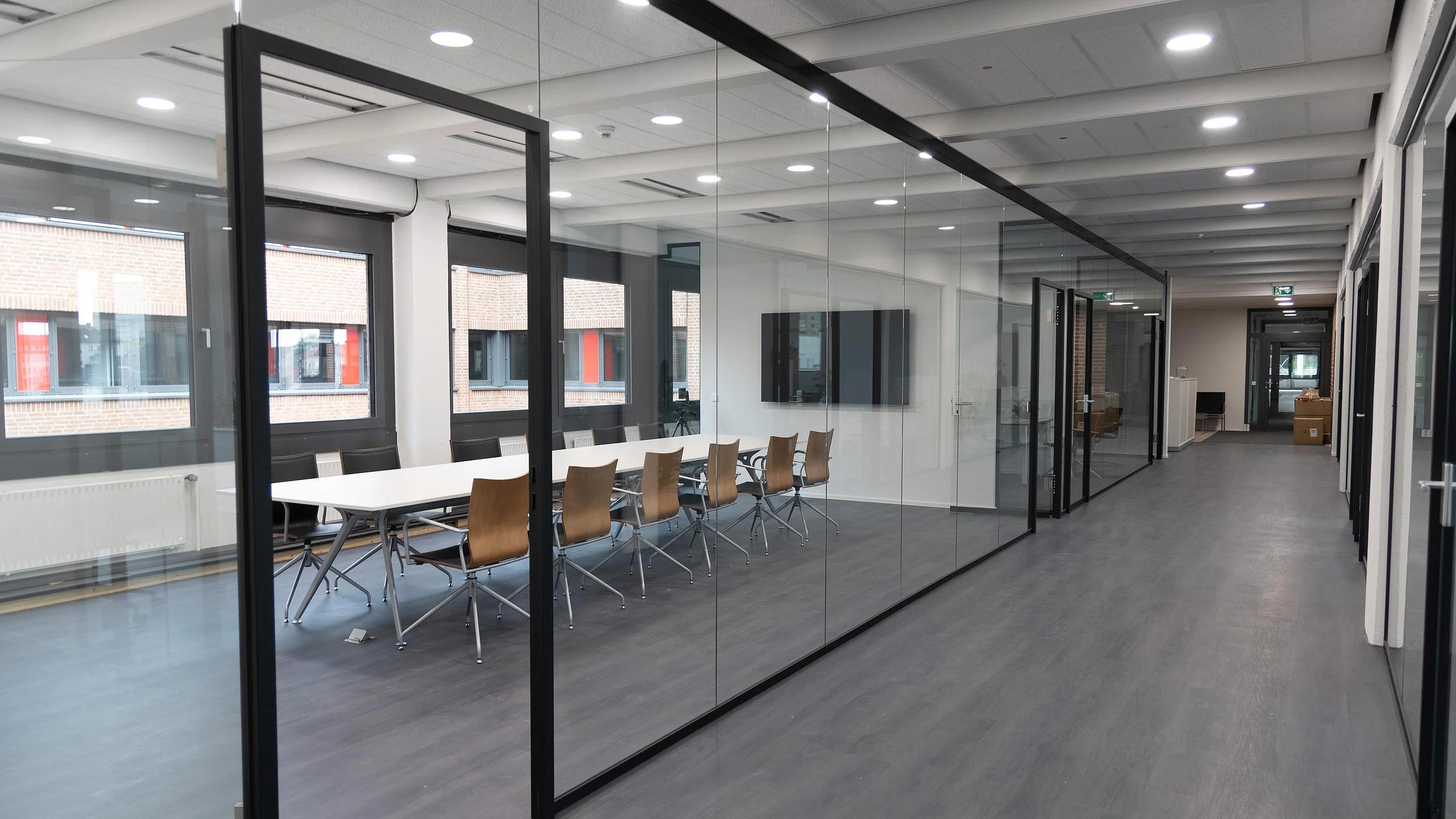
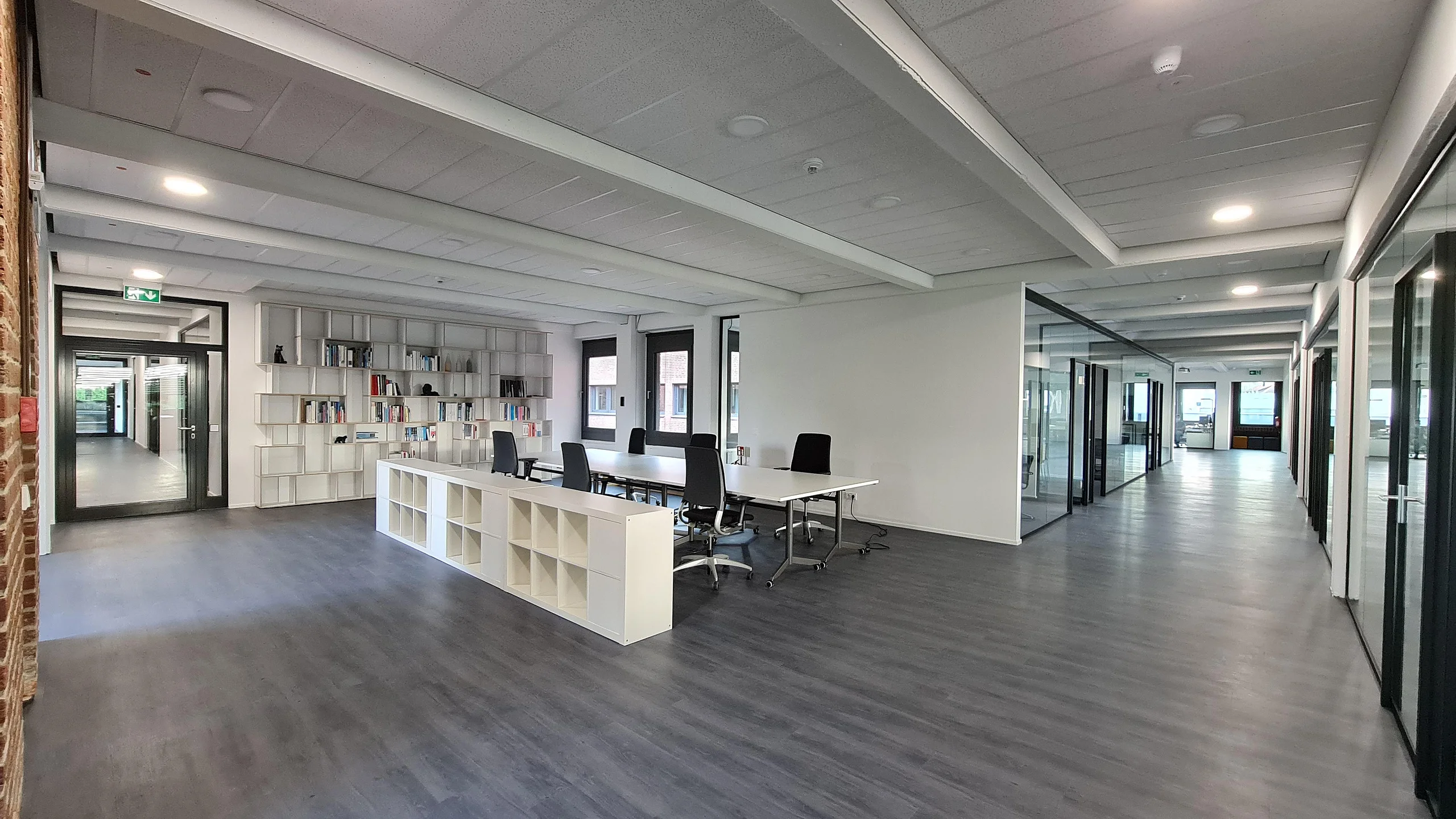
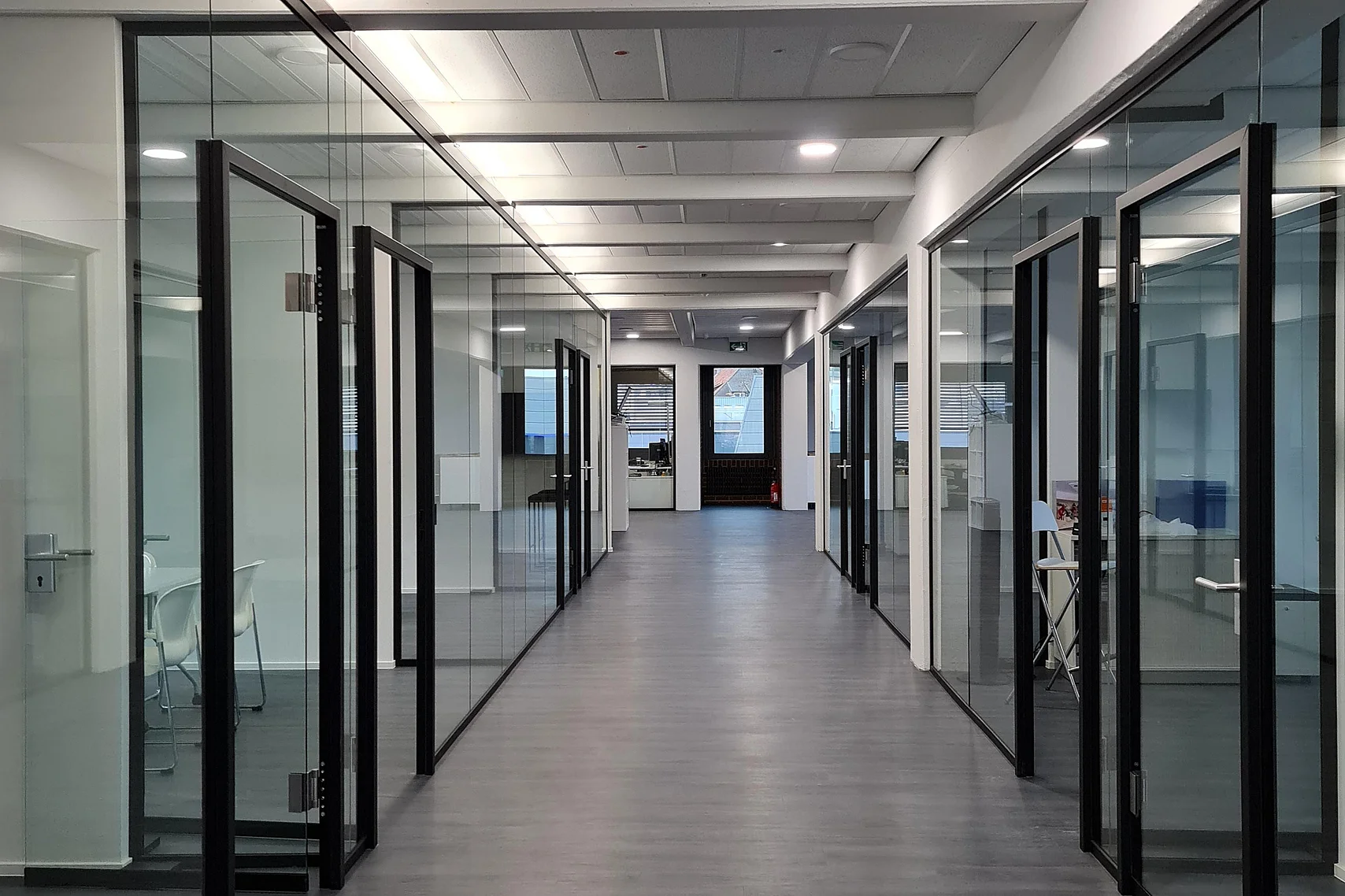
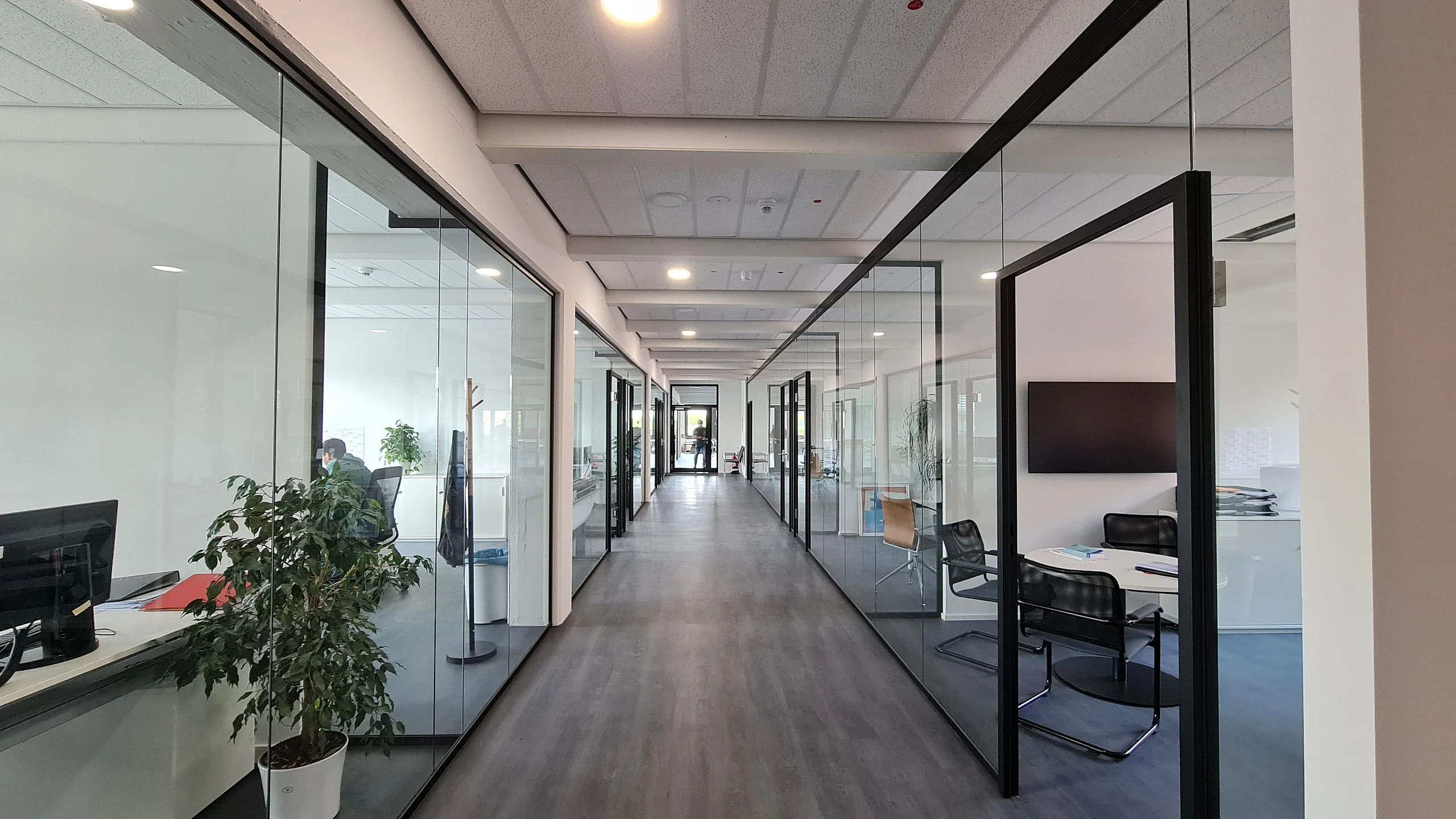
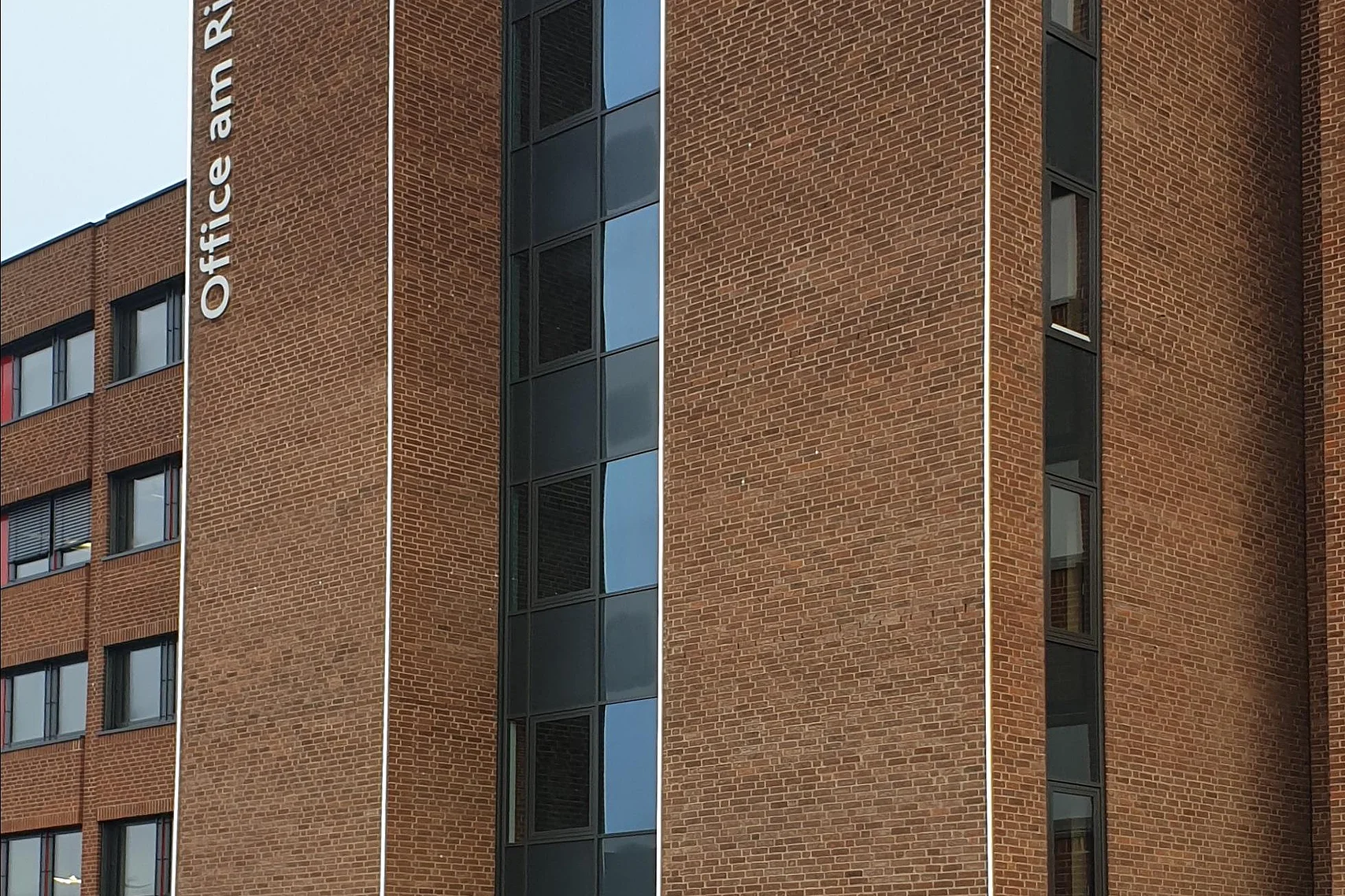
The Jochen Staake Foundation building has undergone extensive renovation in recent months and is now being marketed under the new name “Office am Ringgleis.” The design firm Energydesign, as the occupant, has redesigned part of the office space on its own initiative. The goal was to create a new corporate location where planning and research come together in transparent offices. The result is spacious, light-filled areas with visual connections that foster a pleasant balance between work, communication, and leisure.
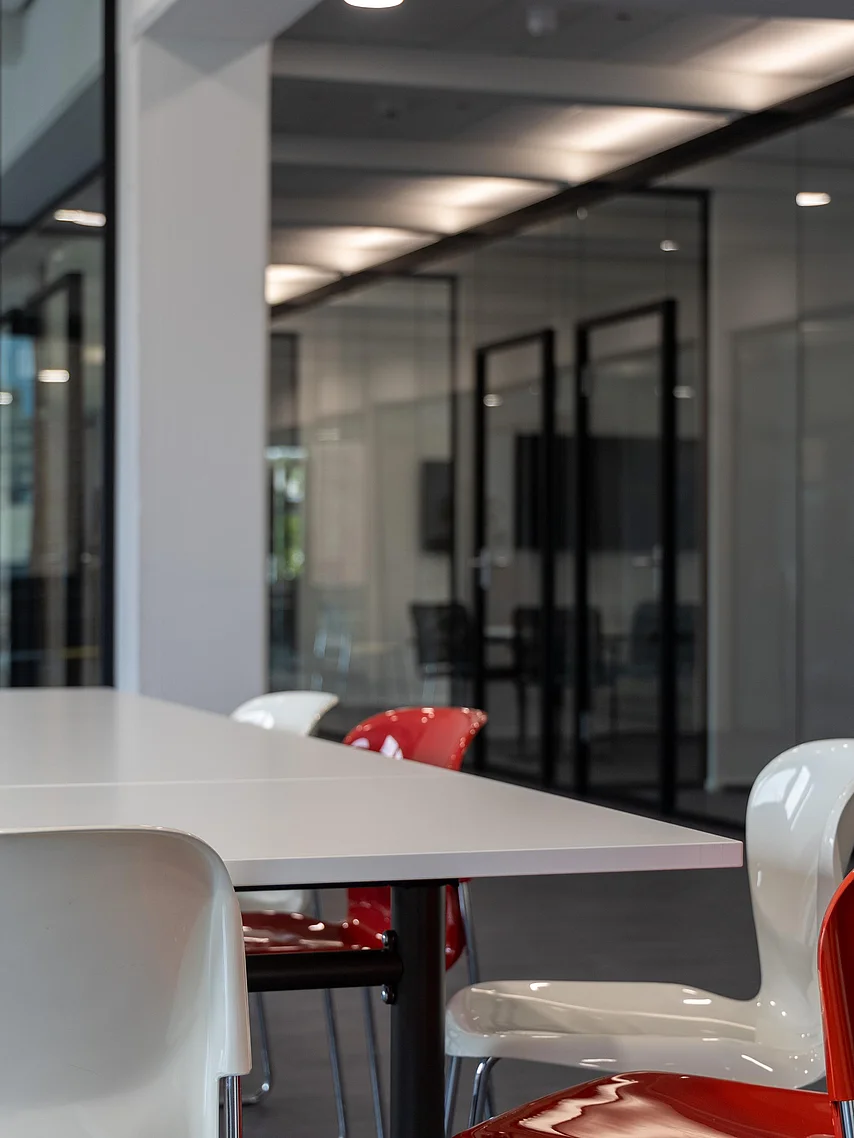
Most of the offices are designed for two people. In addition, there are meeting rooms of various sizes, meeting nooks, a library, kitchenettes, and a meeting kitchen. These serve as central hubs for informal conversations. A large seminar area can be used for medium-sized events.
All office workstations are located directly along the facade, allowing employees to benefit from natural light. Additionally, all office spaces are equipped with floor lamps that operate based on natural light levels and occupancy. External sunshades and triple-glazed windows ensure an energy-efficient, comfortable indoor climate. In the networking areas (kitchen, meeting nooks, etc.), carefully selected lamps create the perfect ambient lighting.
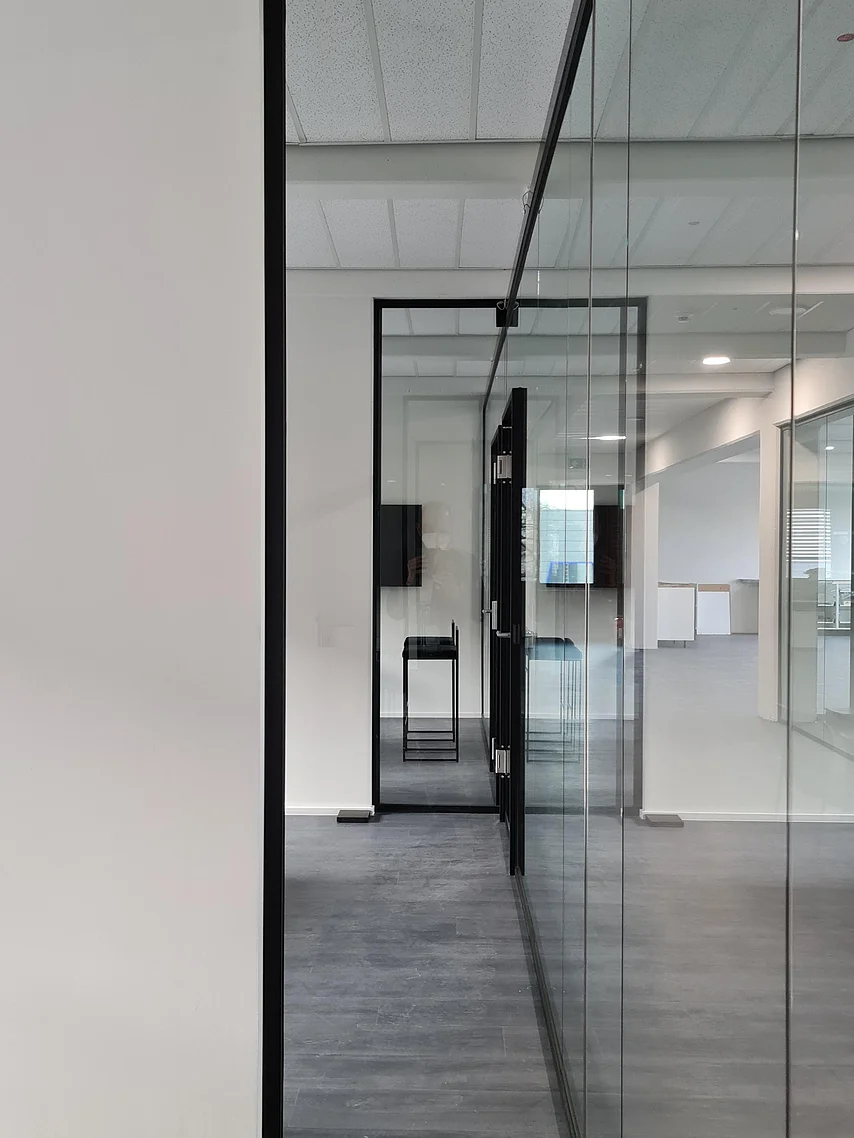
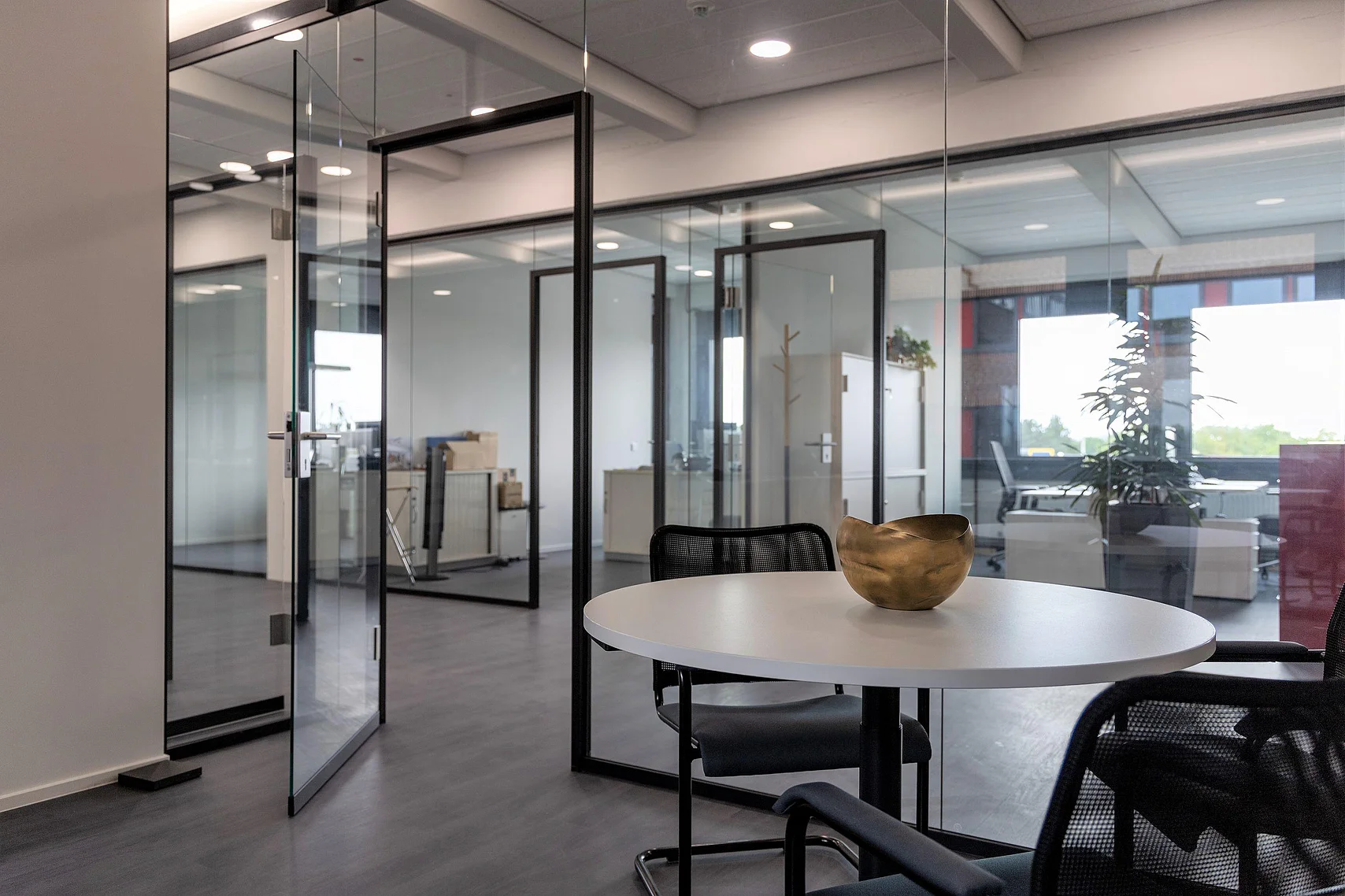
Inside, different functional areas are interconnected with the office spaces through visual connections and transparent corridor walls, creating an open loft-like atmosphere. Glass connecting panels in the office partitions toward the facade and corridors further expand the visual connections and strengthen the sense of community within the team.
Built between 1979 and 1981, the building forms the starting point for the development of Braunschweig’s Nordstadt district in the newly created center featuring full-range retailers, a bistro, and a market arcade; this development will result in the construction of apartment buildings, townhouses, and urban villas.
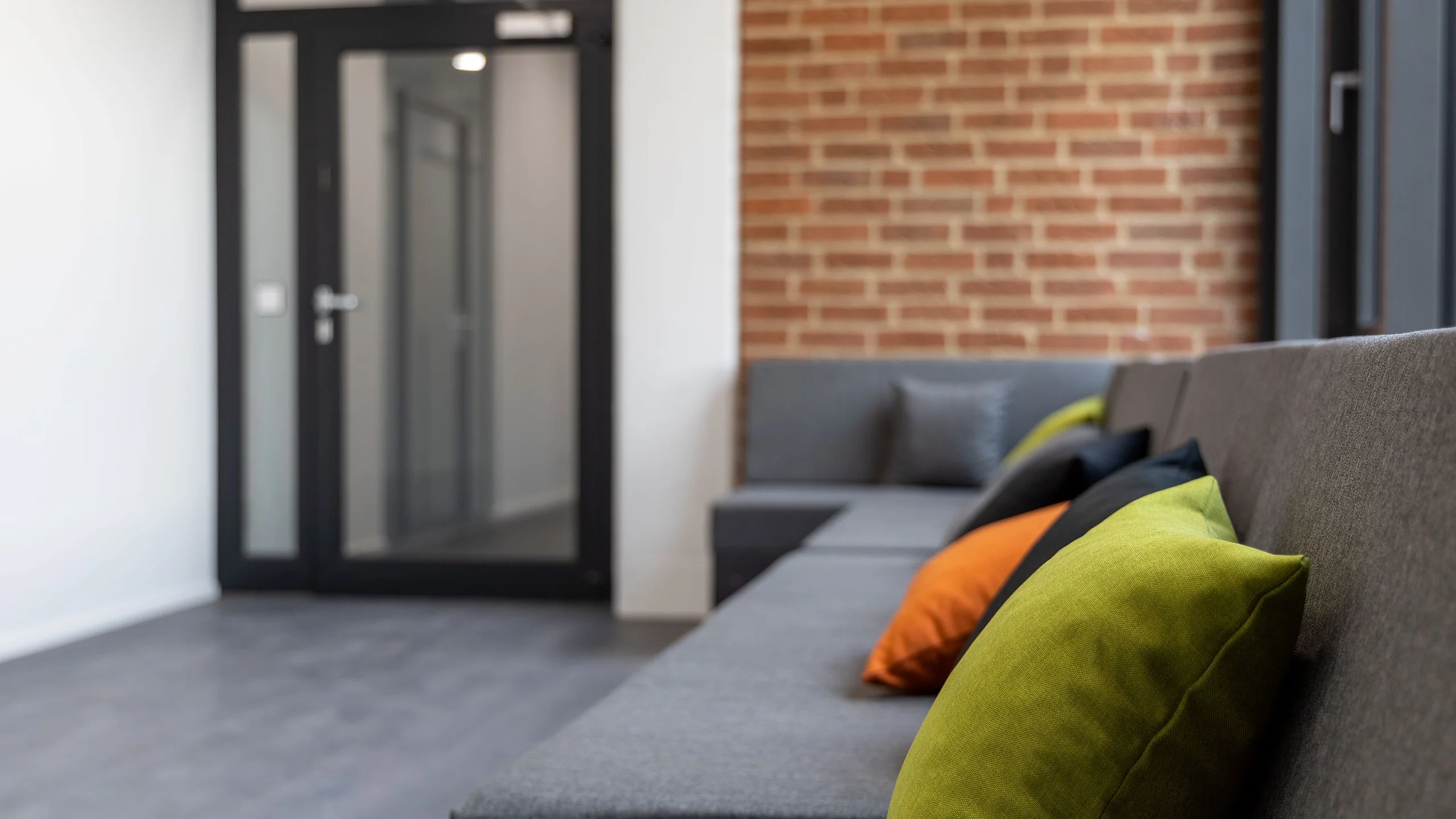
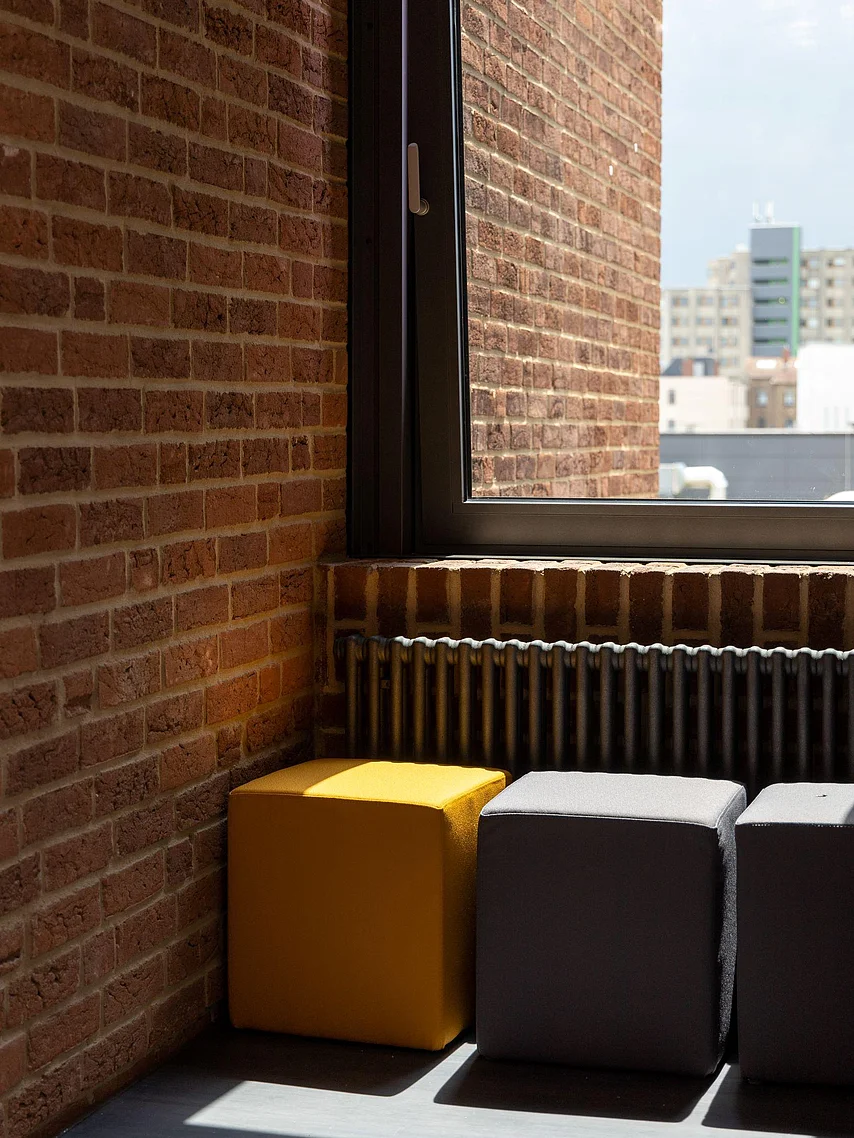
The facade theme of the former press building is red clinker brick, which was already used in the original design as a design element and link between the exterior and interior to emphasize the entrances and foyers. The new interior design contrasts the clinker brick with clear structures, establishing a relationship between old and new.
To help clear one’s mind while working, a retreat (lounge) was created where employees can relax on a custom-designed group sofa.
Naturally, sustainable materials and low-emission paints and coatings were used. A highlight is the Cradle-to-Cradle-certified flooring from Tarkett, which is a recycled product made from automotive laminated glass. The transparent all-glass partition system T50 was intentionally installed in some areas without a direct ceiling connection. Load transfer here is achieved via a square tube, which was connected on-site to the ribbed concrete ceilings.
In total, the newly designed office space accommodates 50 people and additional temporary workstations, as well as reserve space for future offices.